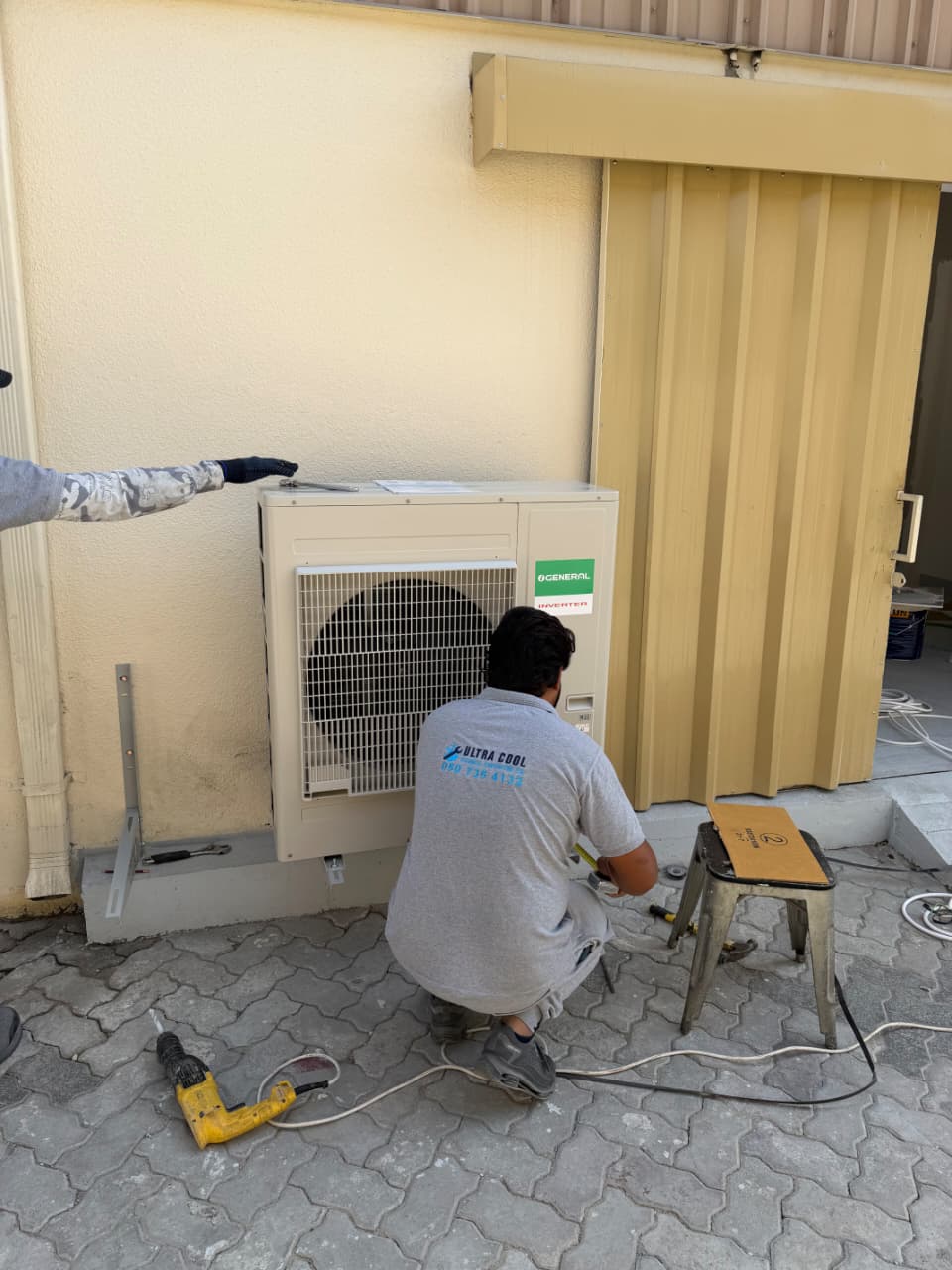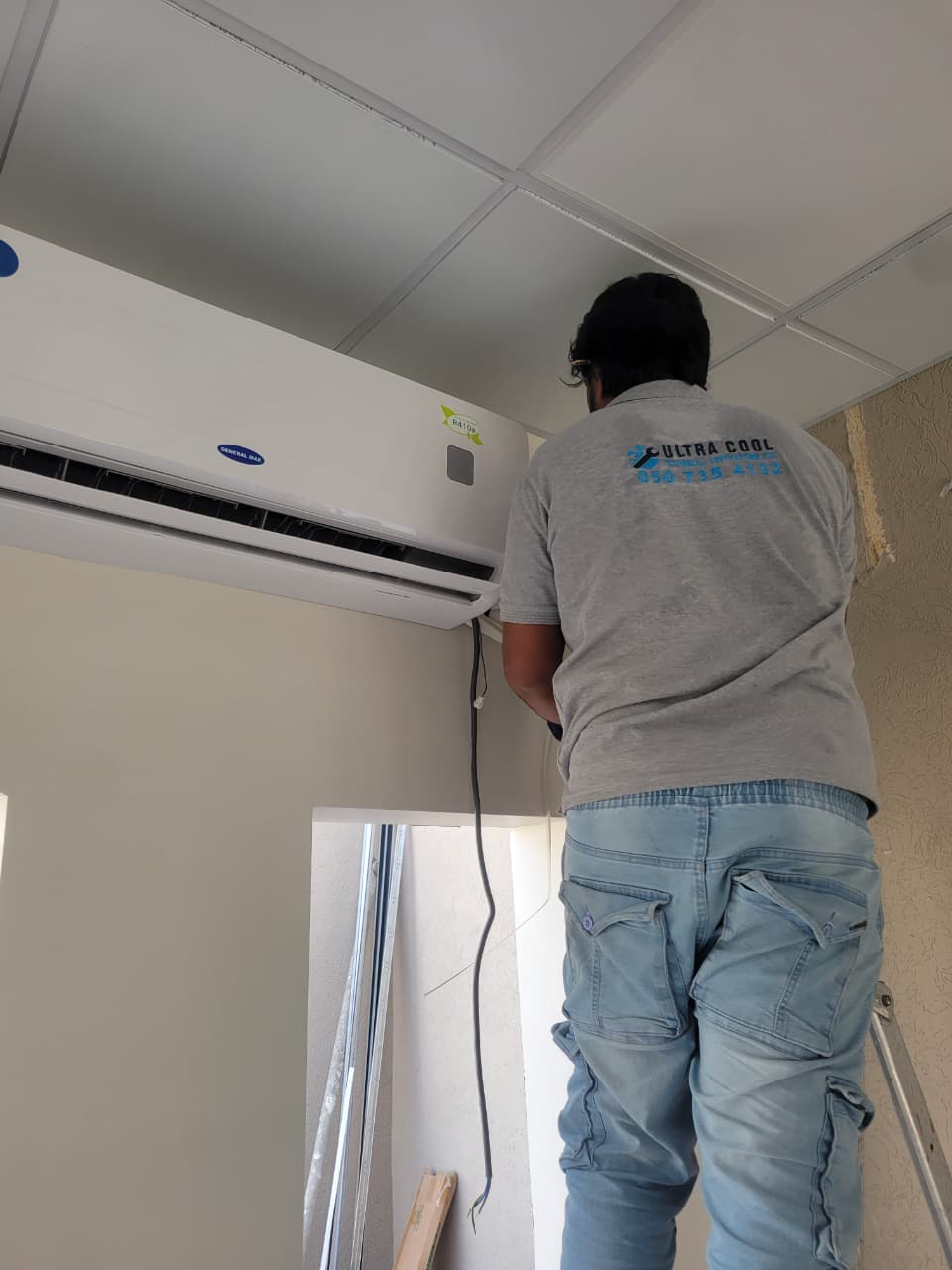
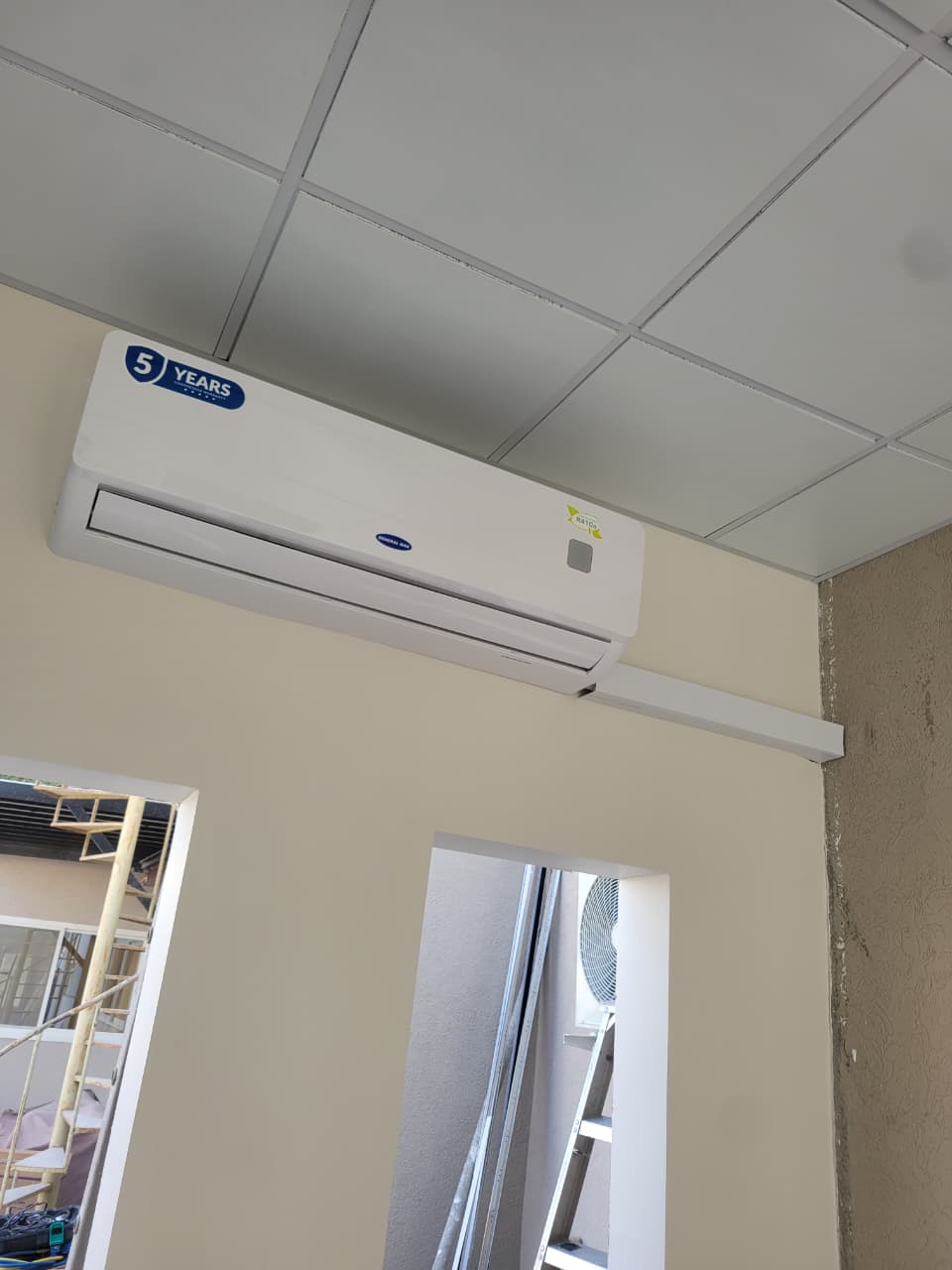
Water from an indoor AC may involve its drain, tray, pump, insulation or melting ice; a ceiling stain alone does not identify the source. Stop the affected unit using its normal controls only if safe, keep clear of wet electrics or unstable ceilings, and arrange inspection. Do not open the unit or force anything into the drain.
An air conditioner removes moisture from indoor air. That water normally collects in a tray and leaves through a condensate drain. When water appears from a split unit or near concealed AC equipment, the drain route, insulation and operating condition need checking rather than assuming every leak is a blockage.
In Dubai humidity, a drainage or insulation weakness can become more noticeable. Water can also travel along a ceiling before you see it. If the source is unclear, report it to the building team as well as the technician: a nearby plumbing leak or another unit must not be mistaken for a confirmed AC fault.
A blocked or restricted condensate drain
Residue can build up in the drain tray or line until water backs up. The unit may leak only after it has operated for a while, and the problem can appear worse on humid days when more condensate is produced.
Clearing a visible outlet does not establish that the complete route works correctly. Ask the technician to identify the tray, connection, drain route and discharge point. Do not push wire into the pipe, pour chemicals into the unit or open a ceiling panel to chase the leak yourself.
Dirty filters, coils and reduced airflow
Restricted airflow changes coil temperature and can contribute to icing. When the ice melts, the volume of water can exceed what the tray or drain manages normally. Dirt can also direct water away from its intended path.
Damaged insulation or sweating pipework
Cold pipes and equipment surfaces need suitable insulation. Missing, compressed or deteriorated insulation allows humid air to meet a cold surface and form water droplets. In a ceiling void, that condensation may travel along pipes or panels before becoming visible.
Drain tray, pump or installation problems
A cracked or corroded tray, failed condensate pump, poor drain slope or incorrectly levelled indoor unit can all cause leakage. Newly installed systems that leak should be checked for drainage layout and finishing as well as blockage.
What to do when you first notice water
Prioritise personal and electrical safety, then protect nearby furnishings where safe. Do not keep running the system simply to observe whether the leak gets worse.
Safe immediate actions
- Stop the affected AC with its normal control only if you can reach and use it safely
- Keep away from wet electrical fittings and arrange a qualified technician; do not touch switches in the affected wet area
- Keep people clear of a sagging ceiling or loose ceiling material
- Move furniture and protect flooring where it is safe to do so
- Take photographs from a safe position; do not climb or stand under an unstable ceiling
- Note how long the AC had been running and whether ice or weak airflow was present
Why repeated leakage needs a wider diagnosis
A drain can be cleared and still block again when the tray remains dirty, the pipe route is poor or an airflow problem continues. Repeated water leakage is a reason to examine the full condensate and operating condition rather than treating only the visible outlet.
Share previous repair details and whether the leak happens while cooling, after switching off or even when the AC has not been used. Ask which source was identified and how drainage and operation were checked after the work. Do not repaint or close an access opening until the source has been addressed and any required follow-up checks are clear.
Prepare access for a Dubai apartment or villa visit
Send the unit type, your building or community and photographs of the visible water. For a concealed unit, say whether a service opening exists without opening it yourself. Ask building management about contractor entry, access to shared drainage and the responsible contact if neighbouring units are affected.
Ultra Cool Technical Contracting FZE serves Dubai from Ajman. Share the location and symptoms by enquiry form, WhatsApp or phone so inspection arrangements can be discussed. The enquiry line being open 24/7 does not confirm immediate attendance.
Water is a symptom with several possible sources. Protect the area, stop the affected unit when safety or damage is a concern, and have the drainage, airflow and insulation reviewed together.
Related services and guides
Send Ultra Cool Technical Contracting FZE your Dubai location, the affected unit and safe photographs of the visible leak. Keep clear if water is near electrical fittings or the ceiling appears unstable.
Frequently asked questions
Continued operation can worsen staining or damage and may be unsafe near electrical components. The source should be inspected rather than ignored.
A blockage is common, but insulation, icing, trays, pumps, installation and pipe routing can also cause water to appear.
The system removes more moisture from humid indoor air, so an existing drainage or insulation weakness can become more noticeable.
Yes. Water can travel from another source, including plumbing or an adjoining area. Tell the technician and building team when the stain appeared and whether the AC was running. Confirm the source before approving AC repairs or ceiling reinstatement.
Water leakage alone is not evidence that refrigerant is needed. The drain, insulation, airflow and any icing need diagnosis. Refrigerant checks and handling must be carried out by a qualified technician, not attempted as a DIY response to a leak.